
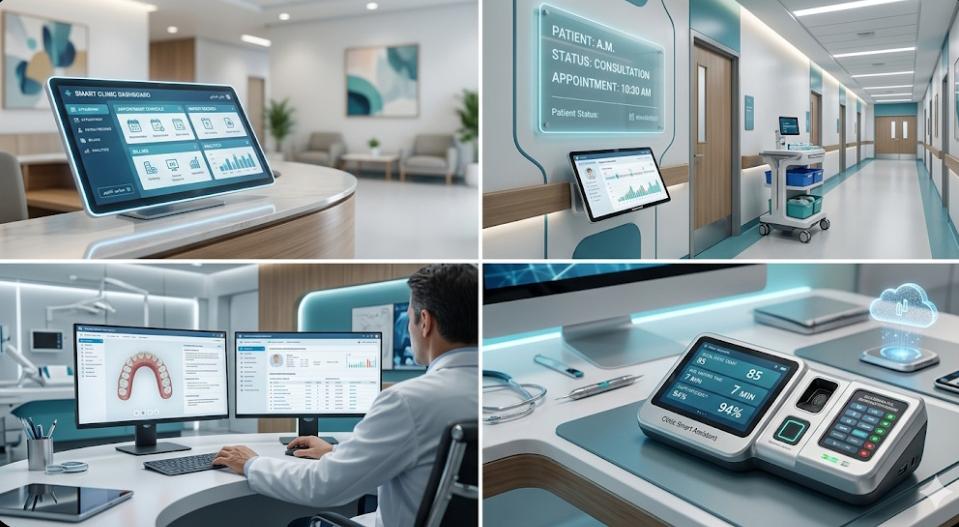
Medical clinics face numerous daily challenges that can affect service quality and work efficiency—from organizing appointments and managing medical records to patient follow-ups and financial performance tracking. With technical advancement, clinic management systems have become the ideal solution to overcome these obstacles, providing integrated tools that simplify operations and enhance patient satisfaction. In this article, we review the most prominent challenges facing clinics and how they can be resolved using advanced clinic management software.
Key Challenges in Clinic Management
Clinics suffer from a group of operational problems that may hinder workflow, most notably:
- Chaos in organizing appointments, leading to overlaps or forgotten bookings.
- Long patient waiting times inside the clinic.
- Difficulty in accessing medical records quickly.
- Weak monitoring of medical and administrative staff performance.
- Errors in billing and financial accounts.
- Deficiencies in managing medications and medical supplies.
- Poor communication with patients after the visit.
- Lack of accurate reports for decision-making.
- An uncomfortable patient experience that reduces loyalty to the clinic.
- Risks related to the protection of sensitive medical data.
What is Clinic Management Software and How Does It Work?
Clinic management software is an integrated digital system aimed at organizing all operations within the clinic and improving its efficiency. The system relies on a set of core functions:
1. User-Friendly Interface:
The software provides a flexible and simple interface that enables employees to manage daily operations easily—such as registering patients, organizing appointments, and following up on cases. This reduces the need for lengthy training and increases the speed of completing tasks within the clinic management.
2. Procedure Automation:
Smart systems help execute many processes automatically, such as booking appointments, sending reminder messages to patients before the visit, and issuing invoices after the examination. This reduces human error and saves time and effort for the team.
3. Medical Records Management:
Digital management contributes to keeping medical records in an organized and secure manner. Through the best clinic management software, the doctor can easily access the patient's history, previous diagnoses, and treatments provided, which helps in delivering more accurate and professional healthcare.
4. Data Analysis:
The development of clinic management relies heavily on data analysis, as the system provides detailed reports on patient behavior, attendance rates, and service levels. This helps management improve performance and make strategic decisions based on accurate information.
Solutions to Improve Clinic Management Using Smart Systems
Clinic management software provides effective solutions that contribute to improving the overall performance of the clinic, including:
1. Enhancing Appointment Organization:
Improving efficiency begins with professional appointment organization. For example, dental clinic management software contributes to scheduling appointments with high accuracy, sending automatic reminders to reduce no-show rates. It also helps balance appointment distribution to avoid overcrowding, directly reflecting on improved patient experience and satisfaction.
2. Speeding Up Patient Reception Procedures:
Accelerating patient registration is a key success factor. The system allows for quick and easy data entry with immediate access to previous information, reducing waiting times and granting patients a more comfortable and organized experience.
3. Developing Medical Records Management:
Developing a digital record-keeping system organizes all patient data for easy access at any time. This helps doctors make precise decisions based on clear and integrated information, enhancing the quality of healthcare provided.
4. Improving Medical and Administrative Team Performance:
Management requires continuous monitoring of performance. The system provides accurate reports on employee productivity and working hours, helping management distribute tasks fairly and effectively.
5. Organizing Medical Inventory Management:
Managing resources is essential. The system tracks medications and medical supplies accurately, providing alerts when stock is low, ensuring availability without interruption and reducing waste and costs.
6. Improving Billing and Accounting Management:
Financial aspects are improved through precise billing and payment tracking systems. The software reduces accounting errors and provides clear financial reports that support sound financial decisions for clinic growth.
7. Enhancing Communication with Patients:
The system allows for sending appointment reminders, following up on cases after the visit, and providing health tips, which strengthens patient trust and loyalty.
8. Developing Reports and Analytics:
The software provides comprehensive reports on overall performance, attendance rates, and revenues, helping management analyze the current situation and set effective development plans.
9. System Unification and Technical Integration:
Unifying operations within one platform increases efficiency. The system can be linked with other services such as laboratories or insurance companies, facilitating fast and secure data exchange.
10. Enhancing Medical Data Security:
Protecting information is a priority. The system provides advanced security technologies like encryption and backups, ensuring the confidentiality of patient data and protecting it from breaches or loss.
Conclusion:
Developing clinic management is no longer an option but a necessity amidst increasing challenges in the healthcare sector. Smart systems contribute to improving operational efficiency, reducing errors, and raising patient satisfaction, making the search for clinic software prices to invest in the best one a fundamental step toward success and sustainability.
other topics:
reference:
1. << https://www.govhealthit.com/what-is-a-clinic-management-system-a-brief-overview-definition/>>, govhealthit.
2. <<How to Choose Medical Software>>, businessnewsdaily.
Add New Comment