
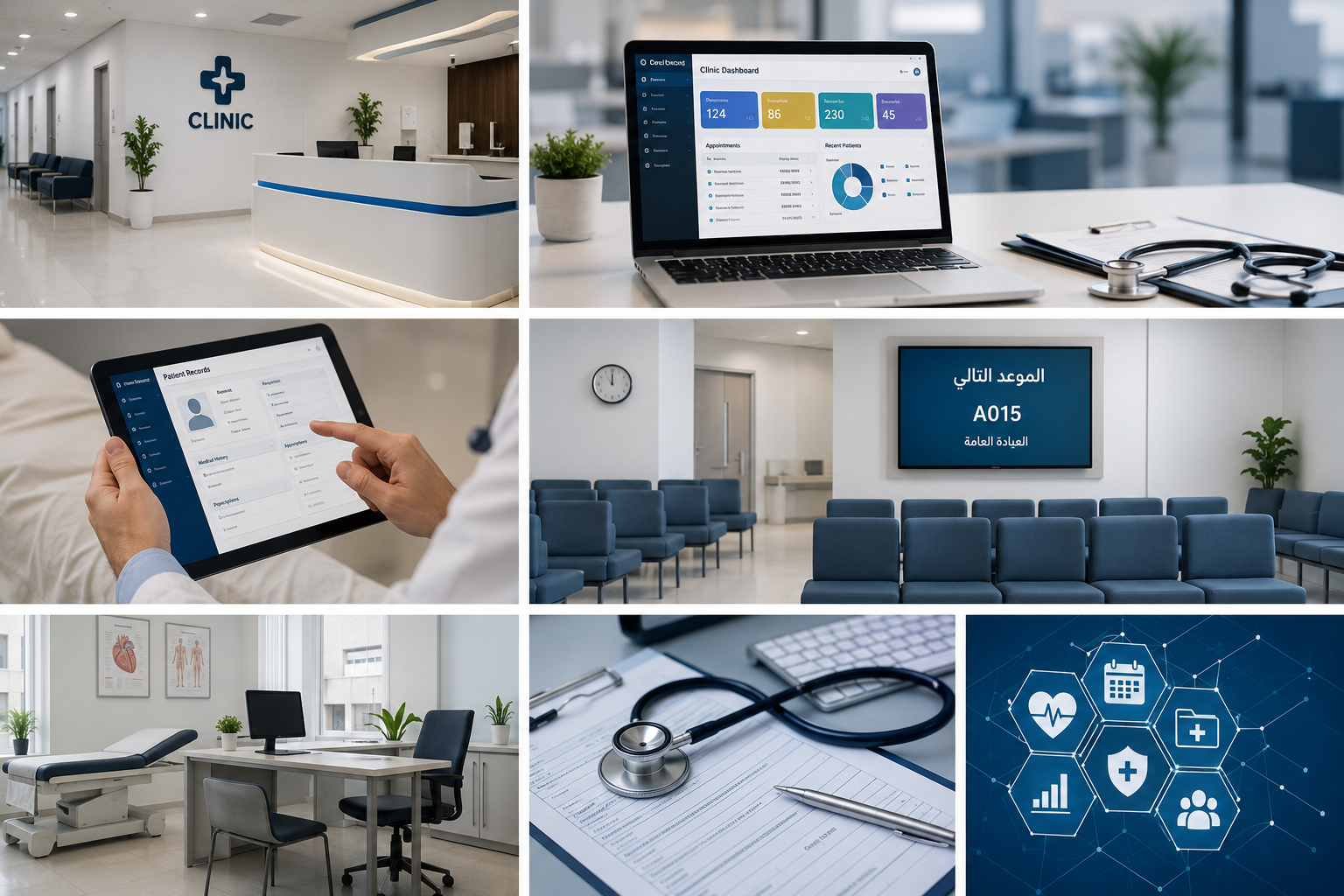
Technological development has significantly changed the way medical clinics are managed, making smart systems an essential part of improving healthcare services and organizing daily operations efficiently. Traditional methods are no longer enough to keep up with the growth of the medical sector and the increasing number of patients. Therefore, using a clinic management system has become a key factor for the success and continuity of modern clinics and medical centers. In this article, we will explore the most important strategies for improving clinic performance using a clinic management system.
How does a clinic management system work?
The clinic management system relies on an integrated electronic system that helps organize all daily operations inside the clinic more quickly and accurately. It also contributes to improving work efficiency and significantly reducing administrative and medical errors. The clinic system works to link different clinic departments within one platform that facilitates the management of data, appointments, accounts, and medical files in a professional and organized way.
Main functions:
- Organizing patient bookings and daily appointments.
- Managing electronic medical files and records.
- Facilitating follow-up of invoices, accounts, and medical insurance.
- Improving patient reception speed and reducing overcrowding.
- Providing accurate reports that help develop clinic performance.
- Facilitating doctors’ access to medical history and examinations.
- Reducing errors resulting from traditional paper-based management.
- Improving patient experience and raising the quality of medical services.
Strategies that help the success of clinics using a clinic management system
Successful clinics today rely on a set of organizational and technical strategies that help improve the quality of medical services and increase internal management efficiency. Among the most prominent of these strategies:
1. Organizing appointments and reducing daily workload
The clinic management system helps organize daily bookings in a professional way that reduces randomness and congestion inside the clinic. It allows precise scheduling and automatic reminder messages to patients before their visit, which reduces no-show rates and improves workflow in reception and different medical clinics. It also gives staff greater ability to follow up and coordinate appointments without delays or overlaps.
2. Improving medical file and record management
The clinic management system provides great ease in creating comprehensive electronic patient files containing medical history, examinations, prescriptions, and reports in an organized and secure manner. This makes it easier for the doctor to quickly access information during examination and make more accurate treatment decisions. It also reduces reliance on paper files that may be damaged or lost over time.
3. Improving patient experience inside the clinic
The clinic management system contributes to improving the patient experience from booking until the end of the visit, as it helps speed up reception procedures, reduce waiting times, and organize payment and billing processes in a more professional way. The faster and more organized the procedures are, the higher the level of patient satisfaction and trust in the services provided inside the clinic.
4. Improving financial and accounting management
The clinic management system helps management track revenues, expenses, and invoices accurately, in addition to managing medical insurance claims. The medical clinic system also follows up on financial payments in an organized way that reduces accounting errors and helps improve the financial stability of the medical facility.
5. Reducing administrative and medical errors
The clinic management system helps reduce errors resulting from manual entry or poor organization of files and appointments, as data is stored electronically in a more accurate and organized way. The system also helps track prescriptions and treatment notes clearly, making it easy to refer back to them at any time without losing important information.
6. Monitoring clinic performance and improving service quality
The clinic management system provides accurate reports and statistics about clinic performance, number of patients, most requested services, peak times, and booking rates. This helps management develop operational plans and improve medical service quality based on clear and accurate data that supports informed decision-making.
Important steps for successful digital transformation in clinics
The success of digital transformation in the medical sector depends on a set of basic steps that help implement technical systems correctly and in an organized way. The most important of these steps:
1. Choosing the right system for the clinic’s nature
The clinic management system helps organize work across different medical specialties more accurately. Therefore, the appropriate system must be chosen according to the clinic’s nature, number of patients, and specialties. For example, choosing a dental clinic system that is not compatible with the nature of the work may lead to difficulty in use and weak benefit from the technical features available in the system.
2. Training employees to use the system
The clinic management system requires continuous practical training for staff and doctors so they can use all system features efficiently. The success of any technical system depends directly on the team’s ability to handle it correctly and quickly without complications or operational errors.
3. Gradual implementation of the system inside the clinic
The clinic management system achieves better results when implemented gradually, starting with appointments and medical files, then later expanding to include accounting, inventory management, and financial reports. This approach helps reduce pressure on employees and avoid errors caused by sudden change.
4. Providing technical support and continuous updates
The clinic management system needs fast technical support that helps solve technical problems immediately without affecting workflow inside the clinic. Continuous updates ensure system development, improved security levels, and the addition of new features that help keep up with developments in the medical sector and improve the quality of services provided to patients.
Conclusion:
The clinic management system today helps medical clinics develop their services, improve work efficiency, and organize daily operations in a more professional way. It also contributes to increasing patient satisfaction and reducing operational and administrative errors within healthcare facilities. Today, clinic software prices offer multiple options suitable for different sizes of clinics and medical centers.
other topics:
reference:
1. << https://www.govhealthit.com/what-is-a-clinic-management-system-a-brief-overview-definition/>>, govhealthit.
2. <<How to Choose Medical Software>>, businessnewsdaily.
Add New Comment