

Electronic archiving is one of the most important digital transformation tools that helps organizations organize their information and improve their performance. However, many businesses are still lagging behind in adopting it due to common and inaccurate myths. These misconceptions not only hinder development, but also waste time, money, and opportunities. In this article, we expose seven myths about electronic archiving and explain the full truth behind each one.
What is electronic archiving?
Electronic archiving is an integrated digital system that aims to collect, organize, and preserve paper and digital documents and files within a secure electronic environment, facilitating their access, management, and retrieval when needed. Electronic archiving is a fundamental part of digital transformation, helping organizations use advanced electronic archiving software that contributes to improving work efficiency, reducing administrative errors, and supporting decision-making.
Electronic archiving relies on advanced technologies that ensure data integrity and continuity. Through a modern electronic archiving system, it enables documents to be linked to administrative, financial, and legal processes within the organization, achieving a higher level of organization and governance.
Electronic archiving jobs
Electronic archiving functions include a set of basic tasks aimed at organizing and protecting documents and improving information management within organizations. The most prominent of these functions are the following:
- Convert paper documents into searchable and usable digital files.
- Save and organize documents in reliable file archiving software that reduces dispersion and file loss.
- Categorize documents by departments, projects, dates, or keywords.
- Facilitate quick and accurate file search within seconds.
- Reduce paper dependence and lower printing and storage costs.
- Protect data from damage or loss with automatic backup.
- Determine access permissions for each user according to their job role.
- Track operations performed via electronic archiving and document management software, such as modifications or deletions.
- Support compliance with regulations and laws related to the preservation of documents and records.
- Accelerating administrative procedures and improving the quality of institutional performance.
- Raising the level of transparency and oversight within the organization.
- Support decision making by providing accurate and fast information.
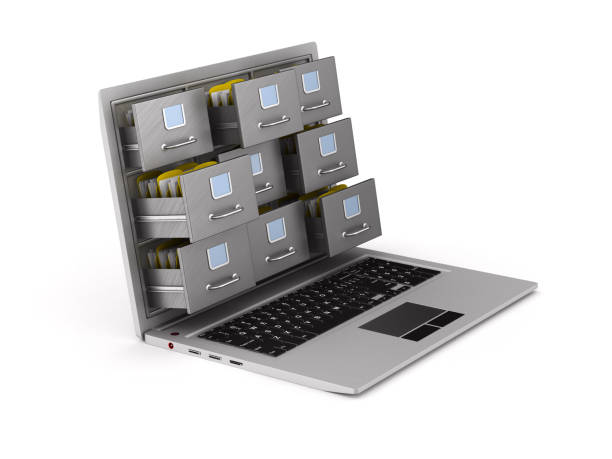
7 myths about electronic archiving that you should not believe!
As we mentioned at the beginning, there is a gap between the technical reality and what some managers and decision makers believe about electronic archiving, and below we suggest to you the most prominent common myths about electronic archiving that reinforce this gap:
Myth 1: Electronic archiving is just "scanning" papers
Many believe that purchasing a "scanner" (Scanner) and converting papers into images (PDF) meant that they had an archiving system.
Fact: Scanning is just an "entry gate," while true electronic archiving is integrated document management and electronic archiving software that includes indexing, intelligent search, OCR (Optical Character Recognition) data mining, and access permissions. Without an intelligent system, paper clutter will turn into a "digital clutter" that is difficult to search.
Myth 2: Paper archiving is safer than digital archiving
There is an instinctive fear that the "hack" might erase everything, while the paper remains tangible and kept in the cabinets.
Fact: Papers are vulnerable to natural damage, fire, and physical theft, and in contrast, powerful electronic archiving software allows advanced levels of encryption, backups in multiple places, and a complete record of who opened the document, when, and what did they do with it, which is impossible in a paper archive.
Myth 3: Digital systems are expensive and not suitable for small businesses
Some view electronic archiving as a luxury that requires huge budgets and giant servers.
Fact: Thanks to cloud computing (SaaS) technology, archiving software is now available with simple monthly subscriptions suitable for startups. In addition, the "opportunity cost" must be calculated; the time wasted searching for a single sheet of paper may cost the company more than the value of the annual system subscription.
Myth 4: Electronic archiving is complex and difficult to implement
Many believe that electronic archiving requires complex systems and high technical expertise.
Fact: Reality has shown that using Fekrait software for electronic archiving or similar systems designed with easy interfaces can be applied gradually without affecting workflow, and solution providers provide ongoing training and support that ensures easy transition from paper to digital archiving.
Myth 5: Electronic archiving eliminates the need for employees
Automation is believed to mean dispensing with humans, generating internal resistance to change.
Fact: Electronic archiving does not eliminate the employee's role, but rather transforms him from a "paper collector" into an "information manager." Activating the digital outgoing and incoming program frees the employee from boring routine tasks to focus on more creative and analytical tasks that serve the company's growth, and therefore the real goal is to raise Work efficiency.
Myth 6: If the Internet goes down, work will stop completely
This fear is logical, but it is based on a lack of understanding of the types of systems.
Fact: Professional archiving systems offer a "work offline" mode where data is synchronized immediately upon reconnection. Organizations looking for the best electronic archiving software can rely on "hybrid systems" that combine local and cloud storage to ensure information is accessible under any circumstances, reducing the impact of any potential failure compared to the significant risks of paper archiving.
Myth 7: The law does not recognize electronic documents
This myth is the biggest obstacle in the Arab region, where some believe that the "living seal" is the only guarantee.
Fact: Most modern legislation recognizes electronic signatures and digital copies as legal evidence. Indeed, reliance on specialized electronic archiving software ensures compliance with legal standards, and government agencies themselves now require the document
Conclusion:
Believing myths about electronic archiving can deprive your business of significant opportunities for development and growth. With the rapid development of digital solutions, electronic archiving has become a necessity, not a luxury. Eliminating these misconceptions is the first step toward building a more efficient, organized, and competitive organization in the digital marketplace.
Important Topics:
Incoming and outgoing electronic archiving (DocSuite)
Automation of automated processes
Reference:
1. << Electronic document & records management system to manage records like money>>, openaccessgovernment
2. << The importance of document storage in today’s digital age>>, citizen
Add New Comment