
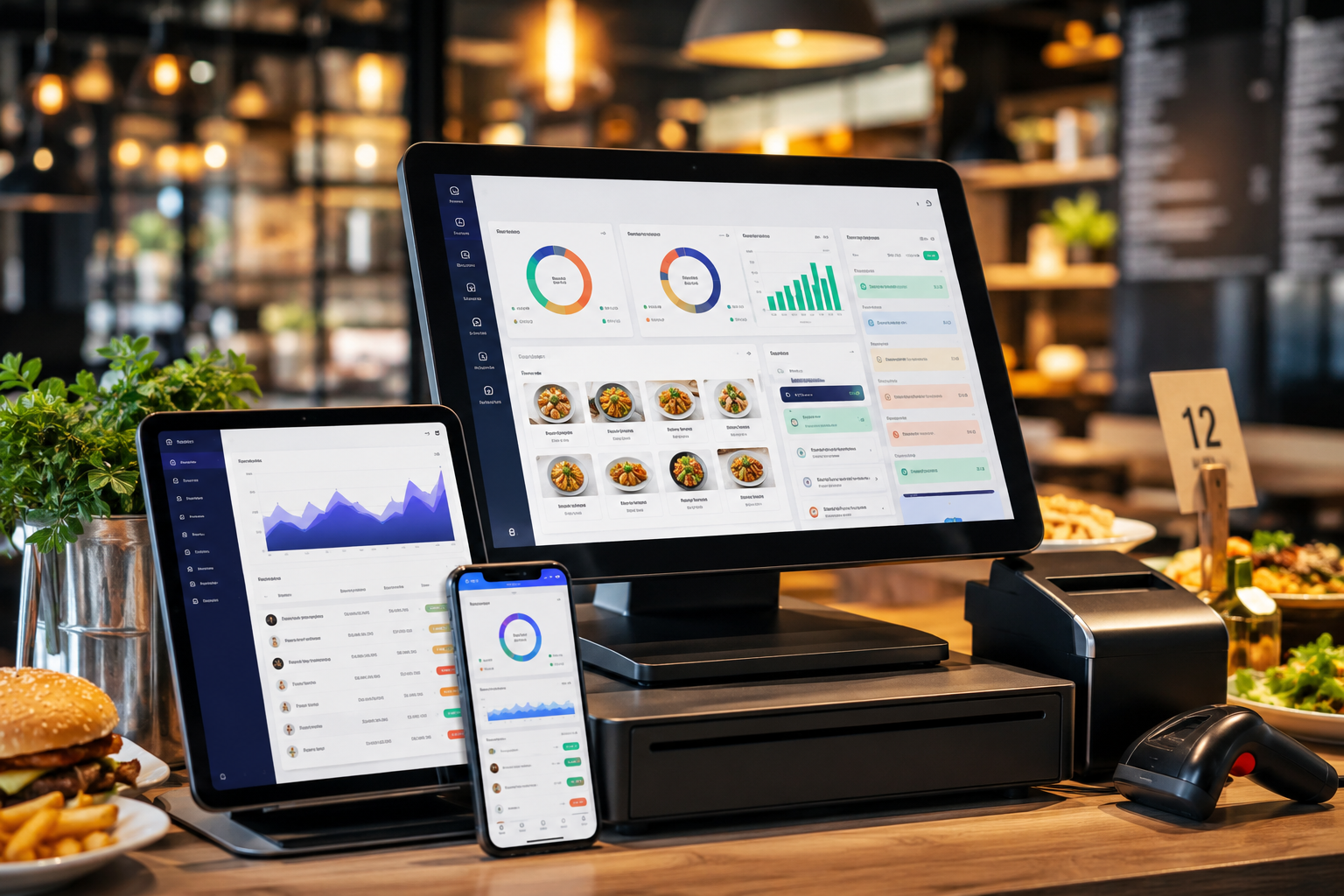
Have you ever imagined that the success of your restaurant in its first year does not begin with the chef’s spices, but rather with the accuracy of the data passing through your technical system? The food and beverage sector in the Kingdom of Saudi Arabia is experiencing tremendous growth and fierce competition, as most emerging projects suffer from severe operational crises at the beginning. In this article, we will learn how to build a successful operating plan for your restaurant in its first year by relying on advanced restaurant management software, so that it becomes the main engine that connects all departments and guarantees continuity and profitability amid the turbulent waves of the market.
Why Does Your Restaurant Need a Technical Operating Plan?
A strong start for any business project requires strict control gateways that prevent operational and financial confusion. The importance of relying on a restaurant management system is highlighted in the following points:
- Controlling startup expenses and avoiding randomness: A professional restaurant management software helps you define a clear spending limit and monitor incoming and outgoing cash flows with extreme accuracy from day one, protecting you from exhausting capital on unnecessary items before achieving the targeted investment returns.
- Building a unified and smooth operational identity: The absence of coordination between the service staff and preparation staff during the first year causes severe crises. Here comes the role of a smart restaurant software that connects all departments through an instant communication network and ensures the smooth flow of orders without human errors that may affect the customer's first experience.
- Preparing for future growth and expansion: The success of future branches depends primarily on the strength of the system applied in the first branch. Documenting all operations through the restaurant management system makes it easier to replicate the experience and apply the same quality and efficiency standards when deciding to expand into different Saudi markets.
- Inventory management and prevention of early waste: The loss of raw materials at the beginning of the project is one of the biggest causes of rapid closure. Integrating warehouses with the best advanced restaurant software allows you to track the movement of every gram of ingredients and alerts you before quantities run out, maintaining business continuity without freezing your money in stagnant goods that you do not need.
- Analyzing consumer behavior and building loyalty: Your technical plan enables you to collect customer data and accurately identify their food preferences during the first year. When your project possesses a powerful restaurant management software, you will be able to launch customized marketing campaigns and smart offers that encourage customers to revisit your restaurant, ensuring the establishment of a loyal customer base in the competitive Saudi market.
Steps to Build the Restaurant Operating Plan
Transforming a theoretical vision into a tangible reality requires organized and carefully studied steps. The elements of this technical plan are represented in the following points:
1. Engineering and Breaking Down Menu Components
A professional restaurant management software allows the breakdown of all recipes, quantities, and core ingredients of every meal with high accuracy. This digital breakdown helps calculate the actual cost of each dish based on changing market prices, ensuring well-studied profit margins through café and restaurant software that protects the restaurant from price fluctuations and achieves the financial balance necessary to cover startup and operating expenses during the first year.
2. Automating the Inventory and Warehouse System
Restaurant management software links warehouses to sales movements in real time and continuously. Ingredients are automatically deducted immediately after any sale is completed through the cashier system or delivery applications, allowing the monitoring of actual consumption levels and comparing them with expected rates, while helping detect any manipulation, waste, or misuse of raw materials.
3. Organizing Work Schedules and Shifts
Restaurant software organizes work schedules and shifts based on previous sales data and expected peak hours, preventing excess staffing during quiet periods or shortages during busy periods. It also contributes to increasing operational efficiency, accurately evaluating employee performance, and providing appropriate incentives.
4. Unifying Multiple Sales Channels
Restaurant management software brings together all sales channels and different delivery applications such as Jahez and HungerStation into a unified screen, reducing operational errors and accelerating the process of receiving orders and transferring them to the kitchen, which positively reflects on service speed and customer satisfaction.
5. Compliance with Electronic Invoicing Requirements
Restaurant management software helps issue electronic invoices that comply with the requirements of the Zakat, Tax and Customs Authority in the Kingdom of Saudi Arabia, including tax invoices and QR codes, ensuring compliance with regulations and avoiding potential fines and violations.
6. Tracking Waste and Damage Levels Daily
Restaurant software records quantities of damaged or expired materials while documenting the causes of spoilage, providing accurate reports that help identify weaknesses in storage or preparation processes and take corrective actions necessary to reduce losses.
7. Automating Purchase Orders for Suppliers
Restaurant management software automatically issues purchase orders when inventory reaches the predefined minimum level, ensuring the continuous availability of raw materials through the best café software and preventing menu items from becoming unavailable due to shortages of essential ingredients.
8. Analyzing Financial and Profitability Reports
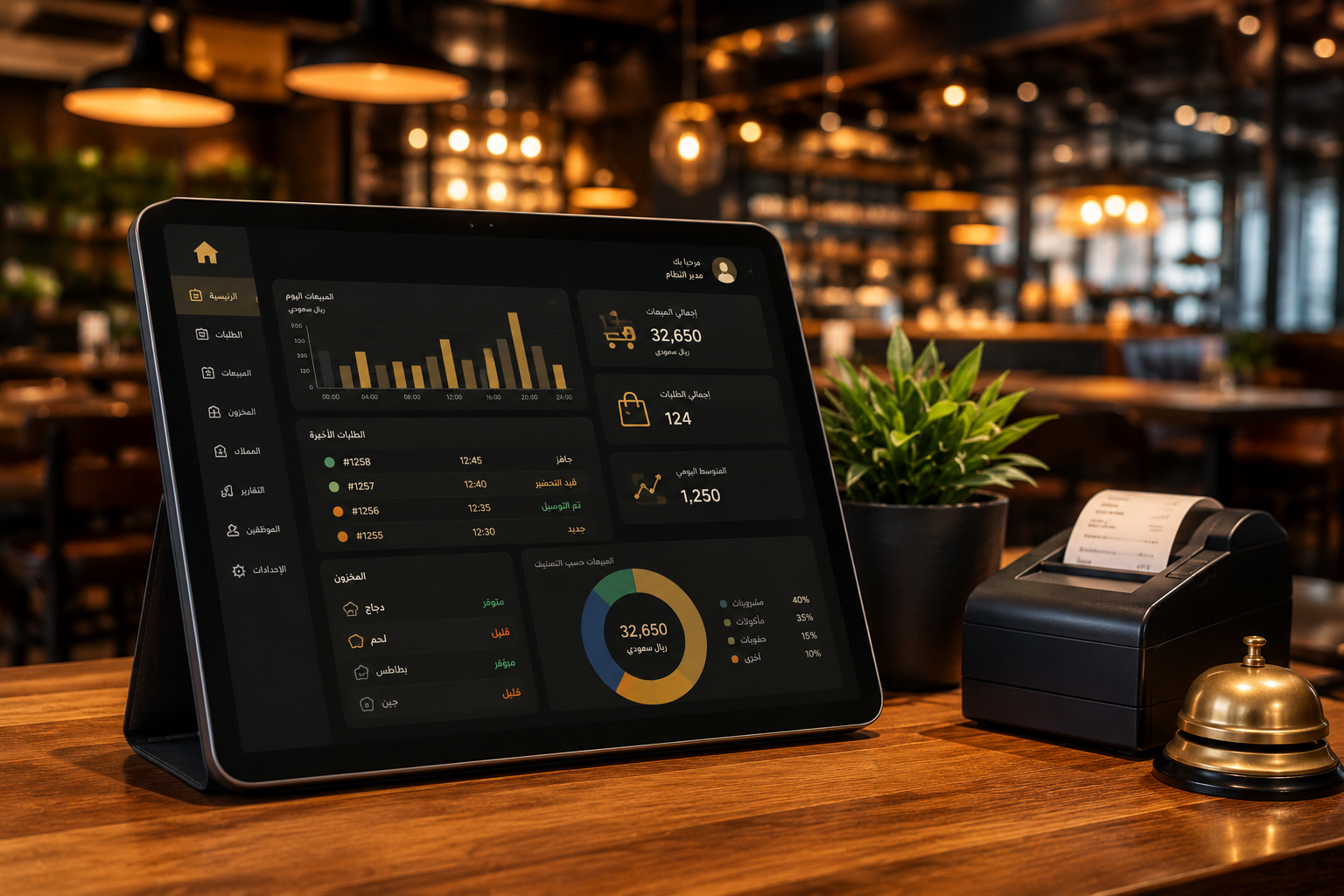
The restaurant management system provides an integrated dashboard displaying profit and loss reports and operating costs in real time, helping the restaurant owner monitor financial performance and make administrative and investment decisions based on accurate and reliable data.
9. Launching Loyalty Programs and Marketing Campaigns
Restaurant software collects customer data, purchasing behavior, and food preferences, helping design customized marketing campaigns and offers that increase repeat visits and contribute to building a permanent customer base for the restaurant.
10. Remote Monitoring and Supervision
Restaurant management software provides the ability to monitor daily operations, financial reports, inventory, and sales movement from anywhere through cloud-based systems, giving the restaurant owner, through restaurant and café accounting management software, complete supervision over operations and helping expand and manage branches more efficiently.
Conclusion:
Hospitality experts confirm that success in the first year does not depend on luck but on the strength of the implemented digital system. When your startup invests in an integrated restaurant management software specifically designed to meet the aspirations of the Saudi market, you transform randomness into an organized and sustainable work system that guarantees complete control over the finest details and opens the doors to safe commercial expansion and growth.
other topics:
reference:
1.<<POS Systems for Small Business>>، kaleidoscot
2.<<POS Meaning – Definition of Point of Sale System>>, miamiherald
Add New Comment