

Cloud restaurants are considered one of the most prominent digital transformations that the food and beverage sector has witnessed in recent years. They have provided investors with the opportunity to launch specialized brands with low operating costs due to the absence of traditional dining halls and expensive geographical locations. With this rapid growth, competition in the digital space has intensified significantly, making strategic marketing the main pillar for ensuring the continuity of these projects and attracting targeted customers through smartphone screens to order meals. In this article, we will review the most effective strategies for enhancing the growth of cloud restaurants, building a sustainable digital identity in the market, and explaining how they work in detail.
What Are Cloud Restaurants?
Cloud restaurants are commercial establishments specialized in preparing and producing food and beverages for delivery only, without having any physical space to receive customers or serve food inside dining halls. This modern investment model relies entirely on digital applications, websites, and restaurant management programs for ordering meals, which significantly reduces capital costs and allows great flexibility in changing menus and testing new items according to market demands. Cloud restaurants are also characterized by sometimes combining multiple independent virtual brands within one central kitchen to increase production efficiency.
How Do Cloud Restaurants Work?
The operating mechanism in this virtual sector depends on an integrated digital system that starts from the customer's screen and ends at their doorstep. To ensure the success of this operational cycle, cloud restaurants follow accurate and organized steps as follows:
- Receiving Orders Through Smart Platforms:The customer browses the restaurant’s digital menu through mobile applications or popular platforms, where the restaurant manages this process by activating an advanced restaurant program that ensures meal details are accurately delivered to kitchen screens immediately after electronic payment confirmation.
- Preparation and Cooking Inside the Central Kitchen: Chefs begin preparing fresh ingredients and cooking dishes according to strict and fast quality standards. At this stage, cloud restaurants rely on task organization to ensure that orders are not delayed and to avoid any overlap between different meals.
- Smart Packaging and Food Temperature Preservation: Ready meals are placed in sealed boxes and containers specially designed to preserve food quality and texture during transportation. Cloud restaurants ensure that packaging becomes a marketing tool carrying their logo to leave a distinctive impression on consumers.
- Delivery Through Delivery Companies and Reaching the Customer: The driver receives the packaged meal from the designated pickup window of the virtual kitchen and heads directly to the customer using digital maps. Cloud restaurants monitor traffic movement to ensure that the order arrives hot and exactly on time.
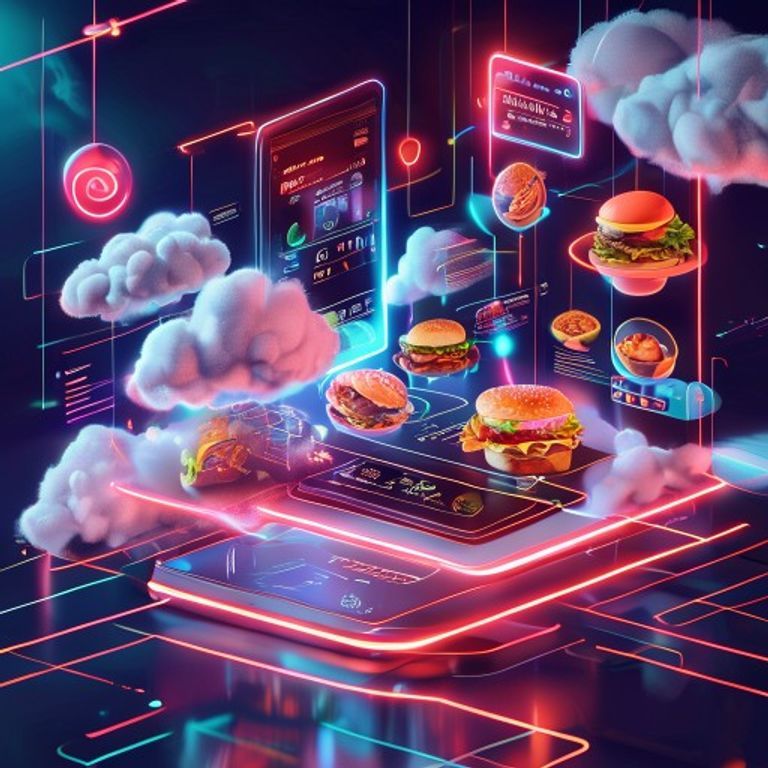
Cloud Restaurant Marketing and Its Smart Strategies
Cloud restaurants rely on digital marketing to reach customers and increase daily orders. Below are the most important smart strategies that help enhance sales and achieve sustainable growth:
1. Improving Presence on Delivery Platforms and Food Applications
Delivery applications are considered the main interface through which consumers see cloud restaurants. Investors should improve the visibility of their dishes within these applications by writing accurate and appealing descriptions for each meal and using professional images that immediately attract attention. To facilitate efficient tracking of these operations, cloud restaurants seek to rely on restaurant management software to connect digital menus, update prices, and manage promotional offers instantly and directly, ensuring that no conflicts occur in orders.
2. Targeted Geographic Marketing Through Paid Advertisements
Cloud restaurants have the ability to accurately define their service areas thanks to their reliance on delivery representatives. Therefore, it is preferable to direct paid advertising campaigns through social media platforms such as Instagram and TikTok toward the residential areas surrounding the kitchen only. This smart targeting helps cloud restaurants save their advertising budgets and attract hungry customers located within the fast delivery range. This digital coordination requires the presence of a restaurant management system to analyze peak times and direct advertisements during periods when demand increases.
3. Collaborating with Local Influencers and Food Content Creators
Food reviews and meal ratings are currently among the most attractive types of content on social media platforms. Cloud restaurants can achieve rapid spread by sending free meals with elegant packaging to local influencers interested in trying food in the targeted area. This method contributes to building immediate trust between the kitchen and the audience because consumers trust the experiences of others. To ensure that management measures campaign effectiveness, providing the best restaurant management software allows it to create special discount codes for each influencer and accurately track the sales generated from each code.
4. Providing Customized Offers and Complete Meal Packages for Companies
Smart cloud restaurants target lunch periods in workplaces and commercial complexes by designing group meal packages at competitive prices. This strategy contributes to increasing cloud restaurant sales during quiet daytime hours before the dinner period. Kitchens rely on operating a program for restaurants and cafes to organize these recurring contracts and large orders, which makes scheduling meals, coordinating departure times, and delivering them to groups easier without any delays.
5. Using Innovative Packaging as a Mobile Marketing Channel
The box or bag that reaches the customer's home represents the only physical communication point between cloud restaurants and consumers. Packaging should be durable, preserve the meal temperature and aesthetic appearance, and include the brand identity logo and colors in an attractive way. Cloud restaurants smartly use this packaging by adding personalized thank-you cards or QR codes that lead customers to evaluate the service or receive instant discounts. This distinction is integrated with activating cafe management software or multiple-branch cloud kitchens to monitor packaging quality for every order delivered to customers.
6. Building an Independent Website and a Dedicated Ordering Application
Despite the importance of intermediary delivery applications, cloud restaurants always seek to reduce the percentage of commissions deducted from them by directing customers to order through their own website. Owning an independent application or website helps cloud restaurants gain complete control over the customer experience and their data in order to market new meals to them in the future. This digital transformation requires accurate knowledge of financial control methods and understanding how to manage restaurant accounts to ensure that direct revenues are calculated and compared with the costs of external applications on a regular and continuous basis.
7. Launching Digital Loyalty and Reward Programs for Existing Customers
Successful cloud restaurants understand that retaining an existing customer who trusts the taste and quality of food is much less expensive than trying to attract a new customer. Therefore, launching digital points and reward programs helps encourage consumers to repeat purchasing experiences in order to obtain free meals or order upgrades. Cloud restaurants use the comprehensive restaurant and cafe accounting program to link customer points and accounts together, preserve buyer data, and facilitate providing customized offers based on their favorite dishes.
8. Using Short Text Messages and WhatsApp Marketing
Cloud restaurants rely on direct communication channels to remind customers of new meals and exclusive offers at strategic times of the day. Owners of virtual projects focus on sending short text messages or messages through WhatsApp before lunch hours, during weekends, and important match times. These quick messages help cloud restaurants stimulate customer appetite and encourage immediate purchasing decisions, which positively reflects on kitchen operations.
9. Producing Short and Interactive Videos Showing Behind-the-Scenes Kitchen Content
Modern consumers tend toward transparency and want to know how their food is prepared, making sharing behind-the-scenes preparation an excellent marketing strategy for building trust. Cloud restaurants create short and spontaneous videos showing strict hygiene standards and fast cooking methods, then publish them through platforms such as TikTok and Instagram Reels. These interactive videos generate wide and free views that contribute to spreading the name of cloud restaurants and introducing the audience to the quality of ingredients used in preparing their favorite meals.
10. Improving Local SEO for Google Maps and Websites
Cloud restaurants target customers who search online for specific meals in their area, such as searching for "the best burger near me." It is essential to register the virtual kitchen on Google Maps with a clear name containing keywords and the actual kitchen location for order delivery. This step helps cloud restaurants appear to searchers on search engines and the restaurant website, ensuring a continuous flow of organic and free orders without the need to spend huge budgets on paid advertisements permanently.
Conclusion
Cloud restaurants have become a modern investment model that relies mainly on digital marketing to reach customers and achieve sustainable growth. Therefore, applying suitable marketing strategies contributes to increasing orders, strengthening brand awareness, and building a loyal customer base. By benefiting from modern technological solutions and smart management tools, cloud restaurants can improve their operational performance, increase sales, and achieve a strong competitive advantage in a market experiencing rapid growth and increasing competition.
other topics:
reference:
1.<<POS Systems for Small Business>>، kaleidoscot
2.<<POS Meaning – Definition of Point of Sale System>>, miamiherald
Add New Comment