
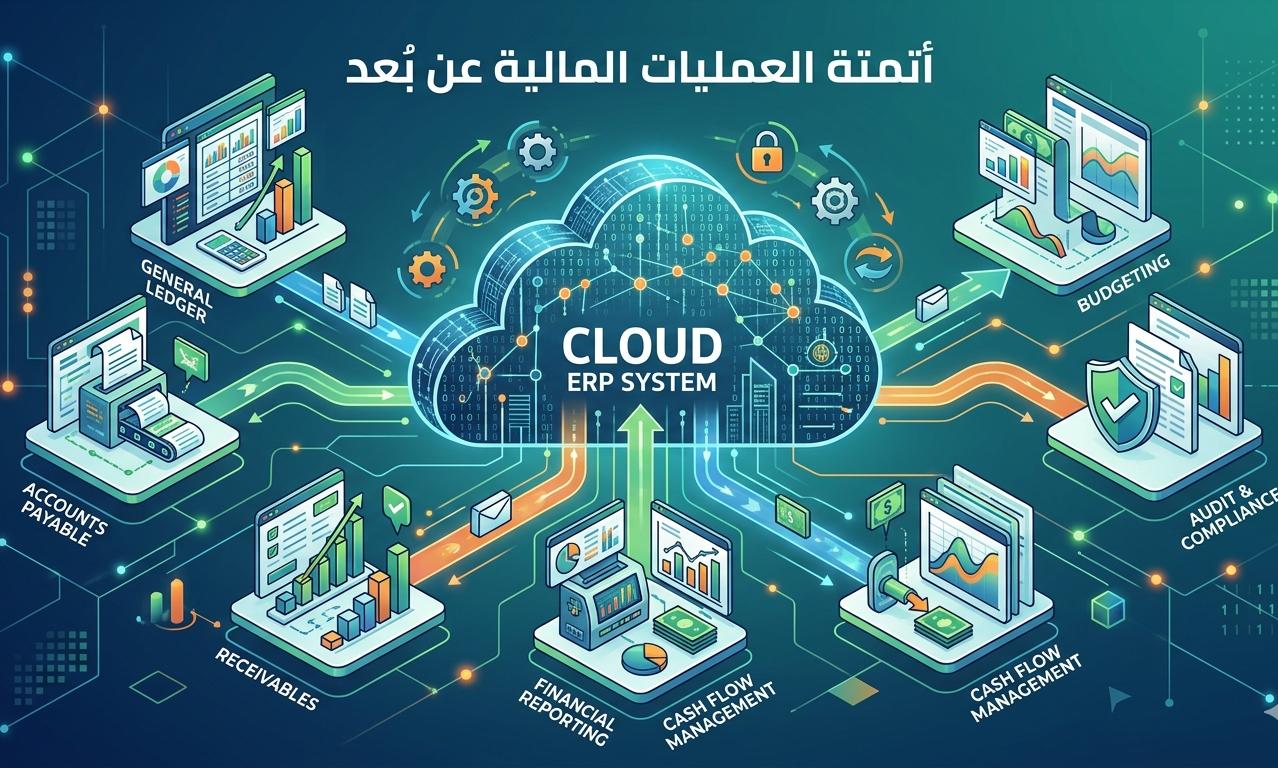
Flexible operation models are now a standard that many companies worldwide rely on, especially in finance departments which demand accuracy, speed, and immediate access to data. This is where an ERP system emerges as an integrated solution, enabling finance teams to perform their duties with high efficiency from any location without compromising quality or security. How is this achieved? Read on.
The Concept of Flexible Operations in Finance Departments
In finance, this concept means enabling accountants and financial managers to execute all financial processes—such as reporting, accounts management, invoice review, and data analysis—without the need for physical presence at the company's headquarters. This is facilitated through the best integrated digital ERP system, ensuring secure and rapid access to information.
An ERP system is one of the most critical tools in this regard, providing a unified cloud-based work environment that includes:
- General Ledger Management
- Income and Expense Tracking
- Invoice and Payment Management
- Financial Reporting
- Integration with other systems
Benefits of Using an ERP System to Support Flexible Operations
The benefits of utilizing an ERP system extend to a range of advantages that help finance departments operate with higher efficiency and flexibility:
1. Access to data anytime and from anywhere
The ERP system provides immediate access to financial data via the internet, allowing financial teams to work from home or any other location without disrupting the workflow. Financial operations can also be followed up moment by moment.
2. Enhancing collaboration between team members
The system allows direct exchange of data and reports between team members. Consequently, the accounting ERP system facilitates collaboration between accountants and financial managers, even if they are in different geographical locations.
3. Reducing human errors
Through the automation provided by the ERP system, reliance on manual data entry is reduced, which decreases errors and increases the accuracy of financial operations.
4. Improving security and data protection
The ERP system provides advanced protection systems such as encryption and permissions management, ensuring the protection of sensitive financial data even when accessed remotely.
5. Immediate reports for faster decision-making
The system allows the preparation of accurate and immediate financial reports that help management make strategic decisions based on real data, without the need to wait.
6. Reducing operational costs
Remote work using an ERP system contributes to reducing costs for offices, equipment, and commuting, which reflects positively on the company's profits.
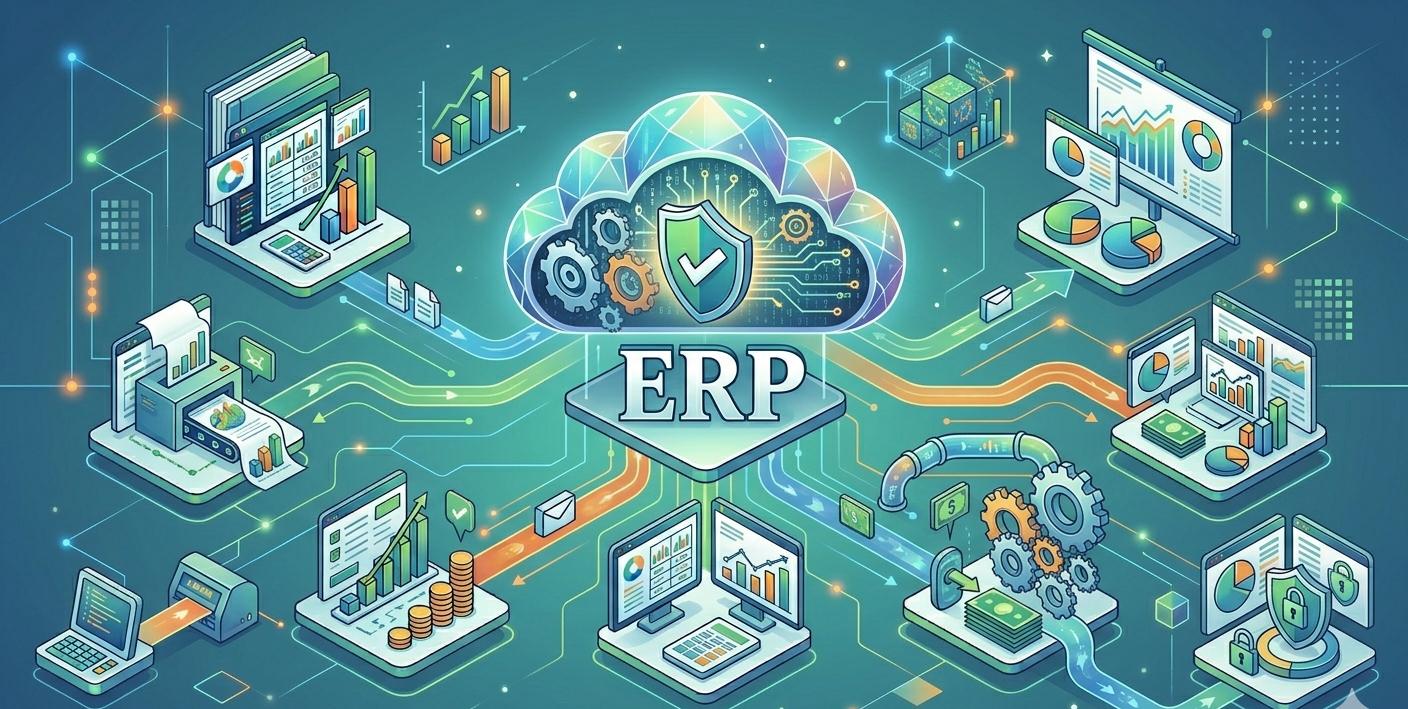
How does an ERP system support remote work for financial departments?
We review below the most prominent ways in which an ERP system contributes to enabling financial departments to work efficiently remotely:
1. Reliance on cloud systems
The cloud ERP system allows access to the system easily via the internet without the need to install complex software or be present inside the company's headquarters, giving employees the freedom to work from any device at any time. The role of the ERP program in facilitating this access stands out here. It also ensures business continuity without interruption even in emergency circumstances, contributing to accelerating task completion and improving the flexibility of the work environment.
2. Automation of financial operations
The ERP system helps automate many financial processes such as issuing invoices, recording accounting entries, and reconciling bank accounts, which reduces reliance on manual work and limits human errors. Companies rely on the best ERP software to achieve the highest levels of accuracy. Additionally, automation contributes to accelerating the work cycle and increasing the accuracy of financial data, which is directly reflected in the quality of financial reports and decisions.
3. Task management and performance tracking
Through the ERP system, tasks can be distributed to financial team members with ease, with the possibility of monitoring work progress in real-time. This helps managers monitor performance and ensure tasks are executed on time. The accounting ERP program is one of the important tools in this aspect. The system also provides a clear vision of each employee's productivity, which enhances collective work efficiency even in a remote work environment.
4. Integration with other tools
The ERP system supports integration with tools such as email, payment systems, and human resources management programs, making it easier to manage all operations from one platform. The enterprise resource planning (erp) system is one of the solutions that helps in linking these systems and unifying them within a single integrated work environment.
5. Permission management and access control
The ERP system provides the ability to define user permissions so that each employee can access only the data that concerns them, which enhances security and protects sensitive information. The accounting ERP system relies on this principle to ensure data protection and precisely organize access.
6. Support for financial auditing and review
The ERP system records all financial operations accurately and in an organized manner, making auditing and review processes easier even in a remote work environment. The company management program is considered an important tool that helps unify data and facilitate its review faster and more accurately.
7. Interactive dashboards
The ERP system provides dashboards that display key performance indicators visually, helping financial managers follow performance easily and make faster decisions. The best ERP system is considered one of the most important tools that provide these interactive dashboards in an advanced and clear way.
8. Cash flow management
Cash flows can be tracked in real-time, helping to manage liquidity and make accurate financial decisions. The HR ERP system also contributes to linking payroll and human resources data with financial flows to ensure a comprehensive and accurate financial picture.
9. Support for compliance with accounting standards
The ERP system helps in adhering to accounting standards and local laws by organizing data and documenting operations accurately. The best ERP program is considered an ideal choice to ensure compliance.
Conclusion:
Adopting an ERP system to support modern operational models in finance departments is not just about facilitating daily tasks; it extends to improving operational efficiency, enhancing security, and enabling accurate, rapid financial decision-making.
Other topics:
Fekrait’s Software for Restaurant and Coffee Shops Management
Fixed Assets And Custody Management System
reference:
1. << Management Accounting>>, businessnewsdaily
2. <<Sage Business Cloud Accounting Review and Pricing>>, business
Add New Comment